
Sammy Woodhouse was fourteen years old when she says she was handed over to the police by the man who was abusing her. The scene, as later reported, is almost too farcical to put to paper. A child had gone missing from her home with Arshid Hussain, one of the men who would later become infamous as part of the Rotherham grooming-gang scandal. According to the allegations reported in court and by the press, Hussain was contacted and told to bring her back. He drove her to a petrol station where the police were waiting. Hussain knew there was an agreement that he would not be arrested.
This is the sort of episode that ought to have erupted into a national scandal inside any functioning public system. Instead, a child was handed over to police by way of a backroom deal with her abuser, on the condition of no arrest. All details were kept secret. There were no records. No institutional memory or bravery to force the truth into the open.
In the reporting of this story, one man’s name appears and reappears: Jahangir Akhtar. Akhtar was the former deputy leader of Rotherham Council, a local Labour power broker, community relations figure, and a distant relative of the Hussain family. The victim of this incident directly alleged that a town councillor — by the surname Akhtar — had also raped her. Another victim alleged it was this councillor who had been involved with the brokering of the no-prosecution deal.
Akhtar denied any wrongdoing. The police, in fact, said he had no case to answer. The official record did not establish that he committed a criminal offence. But what is certainly established when reading the record is that he was far from peripheral to Rotherham’s world.
By his own account, Akhtar entered public life through community tension. He approached his councillor, Nazir Ahmed — made a life peer in 1998 — and was encouraged to gather support to address community cohesion at a higher level. A brief word on Lord Ahmed is warranted. Ahmed is a rather curious character: a property developer and Labour councillor who has been involved in various charities, has connections to Sayeeda Warsi (the daughter of a close friend, and for whom he allegedly campaigned in Dewsbury in 2005, despite Warsi standing as a Conservative), has continually lobbied on behalf of Pakistan over Kashmir (as well as maintaining a more general involvement in Pakistani politics), and was convicted for dangerous driving in 2009 — a conviction which he blamed on ‘the Jews’ in an interview on Pakistani television in 2013, leading to his long overdue resignation from the Labour Party. But perhaps most pertinently of all, Ahmed was also convicted in 2022 of historic sex offences which took place between 1971 and 1974 when he was still a teenager living in Rotherham: two charges of attempted rape, and one charge of indecent assault. In 2020, a House of Lords committee also recommended Ahmed’s expulsion from the House of Lords after a separate complaint that he had sexually exploited a woman who had approached him in his capacity as a member of the House, though he resigned before he could be expelled.
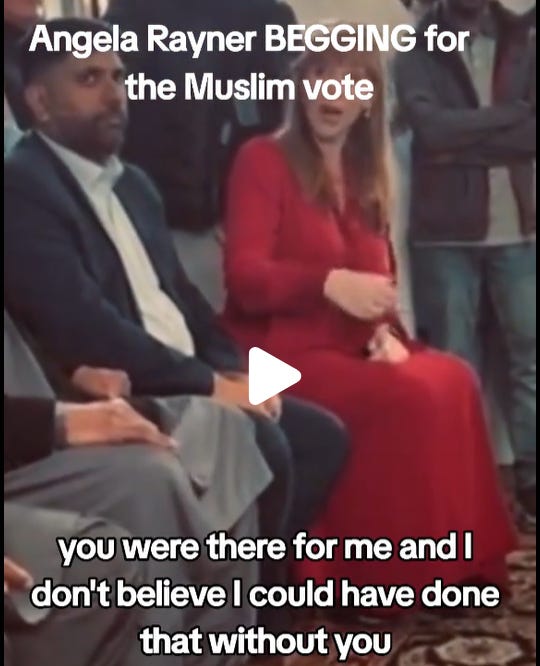
Much has been said of the biraderi (or baraderi), clan dimension to South Asian local politics recently, and it is impossible to understand the political dynamics that led to the rise of figures like Ahmed and Akhtar without understanding biraderi. While this has become a more salient factor in political discourse by virtue of the breakaway of certain heavily Muslim constituencies to the so-called ‘Gaza Independents’ since 2024, in reality, it has been a known and relevant fact of local party politics for many decades. Academic interest in the phenomenon began to pick up in the 2010s as the surprise victory of George Galloway in the Bradford West by-election revealed that minority votes were not exclusively determined by individual loyalties to the Labour Party. In fact, it turned out that ‘elders’ and ‘community leaders’ were incentivised by established local politicians to make ethnicity-based and religion-based claims for their communities, and these ‘elders’ and ‘community leaders’ could return them with bloc votes — from which the victory of Galloway’s Respect and the more recent Muslim First parties are an aberration. This patronage system made such constituencies effectively unpollable, each a black box with dynamics comprehensible only to those with local knowledge.
We should be clear that Akhtar has not been convicted of any crimes — besides his 2002 conviction for violent affray — and, unlike Ahmed, has never achieved national prominence. Perhaps because awareness of biraderi has grown, the Labour Party has seemingly become somewhat embarrassed, rather than proud, of this type of local ‘community figure’, and is therefore increasingly averse to drawing any more attention to their existence than is strictly necessary. Nonetheless, Akhtar and Ahmed do share some uncanny similarities in their life stories. Both sit at the intersection of politics, the police, minority community organisations, local youth, and public money. It is rather fitting that Akhtar’s involvement with Ahmed directly led to the Rotherham Civil Rights Group, which brought together the council, police and young people, and seems to have been the first step in propelling Akhtar to serious positions of power in Rotherham. Akhtar later described the campaign for what became the Unity Centre as one of his proudest early achievements.
It cannot be emphasised enough that Akhtar was not an ordinary councillor. In a town anxious about racial tensions, a man like Akhtar became useful. The Casey Report, published in 2015, notes that he was relied upon by the council for ‘difficult issues’. For example, he was able to prevent ‘Asian’ men from coming out onto the streets when the English Defence League (EDL) marched in the town. He records himself as having attended a Hope Not Hate dinner at the 2009 Labour Party Conference, and having delivered over 800 leaflets for the organisation in May that year.
It was at the altar of ‘community relations’ that, in Rotherham alone, over a thousand mostly white working-class girls were sacrificed. It is worth noting that one of the ringleaders of the Rochdale grooming gang, Shabir Ahmed, was employed by Oldham Council as a welfare rights officer concurrent with his criminal activities. Akhtar’s charity connections are also particularly interesting — the Unity Centre and the Rotherham Ethnic Minority Alliance (which he directed with fellow councillor Shaukat Ali) sat firmly within the web of community relations infrastructure. The Unity Centre itself was incubated with Council money and support, and REMA rented space in the Centre for its purposes. The incestuous relationship between the Council and the charities it funded raises many questions.
Akhtar seems to have been everywhere. A career taxi driver, by 2008, he was, among other things, in charge of taxi licensing in the town. In 2012, he inexplicably secured a position as vice-chairman of the Police & Crime panel, which was tasked with scrutinising the local force. Numerous reports describe Akhtar as having had ‘influence over the police’. A strange position indeed for a man convicted of violent affray in 2002. Interestingly, it is noted in a Guardian piece that he was able to avoid a prison sentence not only for his community relations work, but because he had ‘been given glowing references, including an accolade from a former police commander in Rotherham’. A small WordPress news blog local to Rotherham, meanwhile, alleged that Akhtar had continually threatened them with legal action and coordinated harassment by taxi drivers in a bid to silence their reporting of the facts of his conviction and conduct as a Labour councillor. Despite the conviction, the Casey report noted there was no serious debate about whether Akhtar was a fit and proper person to be on the council. His influence seems only to have grown from there.
By the time of the Casey Report in 2015, it was noted that many officials spoke of him ‘with fear’. They were worried that the evidence they gave for the report would get back to him and that they would face repercussions. It was noted that whenever issues affecting those of Pakistani heritage were brought up, he and fellow councillor Mahroof Hussain would suppress much discussion, for ‘fear of upsetting community relations’. It came to the point that when the relationship between taxi drivers (who in Rotherham were overwhelmingly of Pakistani origin) and Child Sexual Exploitation was raised in meetings, the issue was suppressed in light of this fear. This should be astonishing to anyone putting the facts of the Rotherham story together.
The story of Rotherham and the grooming gangs is partly one of state failure. Too many looked the other way. No single politician, council worker, or policeman was prosecuted for their role in the scandal, either in Rotherham or elsewhere. In Telford, where authorities repeatedly turned a blind eye and emboldened offenders, and Oldham, where ‘fears of the far right’ led to accusations of deliberate cover-up, the people in charge failed, if not outright facilitated, the abuse of thousands of children. This issue persists across the country.
So, where does Andy Burnham lie in all of this? After being elected mayor in 2017, Burnham authorised a number of local probes into the allegations across Greater Manchester. These investigations bore little fruit. The Oldham report, commissioned in 2019, was widely regarded as flawed and limited, subject to years of ‘short’ delays, and released only in 2022. In the direct context of growing suspicion about the role of local authorities in the story, the reports themselves did nothing to investigate the Council’s role in these cases, nor were they given the remit to do so. Instead, they focused on the narrow issue of allegations around local shisha bars and incidents of Child Sexual Exploitation.
It asserted that there was no cover-up or evidence that the Council was unwilling to deal with the issue. This is despite the evidence within even the report itself that the Council had interfered with at least the reporting of the shisha bars story. In June 2013, for instance, a BBC journalist contacted the Council for a statement or details on the shisha bar allegations, which apparently caused ‘consternation’. One councillor rang the journalist and convinced him to ‘drop the story’. Malcolm Newsam CBE later defended the report, arguing that ‘the review was never set up to be a wholesale review of the prevalence of child sexual exploitation and grooming gangs’.
Later, a wider probe was commissioned and led by two leading independent experts appointed by Burnham, Newsam and Gary Ridgway, and national police inspectors with ‘statutory powers’. Local authorities responded, in the words of Baroness Louise Casey, by ‘lawyering up’, and the Greater Manchester Police made noises about ‘difficulties with disclosure’. Newsam and Ridgway were repeatedly blocked from accessing crucial information and subsequently resigned. Burnham did not follow up or do anything to address the insufficient remit of his investigations — instead, Burnham continually pleaded for trust in the reports process, while victims continually urged the government for a full national inquiry with the appropriate powers.
Finally, as a response to a major television documentary and the Conservative amendment to the Children’s Wellbeing Bill for a full national inquiry, by January 2025, Burnham called for a ‘limited’ inquiry across the nation — while being keen to stress his objections to a ‘distasteful politicisation’ of the issue. This is despite having perhaps the greatest exposure to the issue of the grooming gangs of any national political figure, and was well aware of the repeated insufficiencies of the probes he commissioned himself. Burnham has been no different to any of the rest of the establishment — who have only been dragged, kicking and screaming, to give the greatest scandal of modern British history a crumb of the attention it deserves. It is revealing that in Burnham’s 2024 book, Head North: A Rallying Cry for a More Equal Britain, which talks passionately, at great length about examples of the state failing, or betraying, ordinary people in incidents such as Hillsborough and Orgreave — without a single word on the grooming gangs or CSE, a curious fact given his later defence of his own investigations and attacks on ‘Westminster’ for having ‘taken no interest’ in them when they were published.
Reform UK’s Zia Yusuf has since demanded to know why Burnham, in his capacity as Greater Manchester’s Police and Crime Commissioner (a position given to him as Mayor of Greater Manchester), failed to grant the review the necessary access. Burnham has only skirted around his defence of the obvious failures of the local reports, rehashing old lines that the expression of legitimate concerns about the involvement of local leadership with the grooming gangs is an attempt to ‘create hate’.
One of the starkest failures appears to be in the fact that men like Akhtar were able to accumulate vast amounts of formal and informal power with few, if any checks. The web of relationships between the state, third sector, and ‘communities’ drastically increased the number of areas vulnerable to abuse. This is perhaps best illustrated by the data-loss saga which occurred in 2011. The council suspiciously failed to inform the Information Commissioner’s Office (ICO) about the theft of twenty-one laptops holding important data on victims of Child Sexual Exploitation. A meeting of the council’s Corporate Governance Board and IT Governance Board, itself chaired by Akhtar, failed to record any minutes and was told that a report was being prepared to recommend that the Senior Leadership team should not file the loss with the ICO. In fact, it turned out the ICO only discovered the incident due to press reporting.
Akhtar appears at every juncture in the Rotherham story and at every institutional pressure point: community brokerage, police liaison, youth and neighbourhood activity, licensing and regulatory functions, publicly funded community organisations, a major official inspection’s account of local fear and power, a CSE handover allegation, and the council data-loss scandal involving sensitive information. In fact, his own daughter’s employment came to light in 2019 when the charity she worked for, Rotherham Rise, was criticised for employing her in a senior role supporting victims of Child Sexual Exploitation. This is a remarkable mark on the town for a single individual and his family.
He is representative of the wider problem: a total failure by the authorities, and sometimes outright collusion, in one of the worst atrocities ever perpetrated on British soil. It would be no surprise to discover hundreds of Jahangir Akhtars up and down the country, and no one, least of all in the Labour Party, has done enough to uncover the full story. Given the importance of baradiri networks as powerbrokers in (particularly) Labour local politics, it does not take much thinking to explain the reluctance of its senior politicians to upset the apple cart.
The grooming gangs story is not over. In August 2025, the NCA agreed to take over an investigation into South Yorkshire Police’s own officers being involved in child sexual abuse. The IOPC also announced that the investigation, under its direction, would be carried out by the NCA. The decision followed concerns about South Yorkshire Police investigating matters connected to its own past. The Rotherham scandal was never solely about the individual offenders but the machinery around them: police, council, licensing, social services, political leadership, record-keeping, and local influence. If police-corruption allegations remain live, then the older question of who had influence over police-community relations becomes newly relevant. If the allegations are proven true, the stories of Ash Hussain’s police connections become much more pertinent.
Akhtar’s record has a present-day coda. Companies House now lists him as an active director of College Road Community CIC, incorporated in 2024. The company’s filings also list him as a person with significant control. After everything Rotherham has been through, one of the town’s most controversial former political brokers is again formally involved in a community-interest vehicle, still touching education and social support. It should be noted that they have received a first compulsory strike-off notice.
Jahangir Akhtar’s public record is therefore not a side issue. He rose through community tension, police and council engagement, and the creation of a multicultural community institution. He later held cabinet responsibilities touching neighbourhoods, safer-neighbourhood structures, licensing, housing and regulatory functions. Companies House records place him in a network of community and public-service-adjacent bodies. Casey described him as powerful and feared, recorded his affray conviction, and noted reporting about his involvement in a CSE handover. The Guardian reported allegations linking him to a no-prosecution handover involving Arshid Hussain, a distant relative; Akhtar denied wrongdoing. The IOPC’s Operation Linden report later examined South Yorkshire Police’s handling of non-recent child sexual abuse and exploitation in Rotherham between 1997 and 2013, including failures around intelligence, recording and the handling of vulnerable victims.
Taken together, these records show why Akhtar — those like Akhtar and Ahmed before him, across the country — remains one of the least-explained aspects of the grooming gangs scandal, involving the intersection of public money, community brokerage, police failure and child-protection collapse. Rotherham, or any grooming gangs story simply cannot be understood while men like Akhtar remain outside of the conversation, and while senior politicians like Andy Burnham hedge their bets against ‘ensuring victims can be heard’, without action.
Until politicians are openly willing to name and disentangle the relevant local networks — not left as rumour, but in public record — Rotherham remains only partly understood. It is necessary to do a full audit of the political failures involved to truly obtain justice for the thousands of girls subjected to this inhuman ordeal. To do so, we must first have new politicians willing to begin this task.
This article was written by David Ogilvy, a Pimlico Journal contributor. Have a pitch? Send it to submissions@pimlicojournal.co.uk.
If you wish to support what we do, please consider subscribing. If you are already subscribed, why not upgrade to a paid subscription?
We need to confront some harsh truths here. These people have a serious will to power and no hesitation about using it. Our people are passive and disorganised. The states accedes to them because it sees them as more dangerous and organised. How the hell do we get out of this?
The client-patron relationship to be precise.