
Whether the calling of the Clacton by-election was a shrewd choice by Nigel Farage remains debatable. In the moment, it seemed a clever way of seizing the moment and regaining control of the narrative. But as every other serious party declined to run and the attention of the media was dragged first to the murder of Ann Widdecombe, and then to the ascension of Andy Burnham, the opportunity to define the terms of conversation through the conduct of the contest faded. Yes, the move has, to some extent, disrupted the constant flow of criticism over donations to the party and to Farage himself, and has somewhat neutered the political impact of a forced by-election if one occurs following the report of the Parliamentary Commissioner for Standards. But it has also taken Farage away from the national picture at a time when he is increasingly needed, and his personal popularity remains at historic lows — showing it has not been the turning of the corner it was hoped to be.
Regardless, the point of this article is not to relitigate past decisions. It is not for us to drive from the backseat, and no-one can deny Farage’s unique ability to sense the public mood and find the most effective path through it. A good soldier in the people’s army answers the call of his leader whenever it is issued, and so it was that I found myself on the train from London Liverpool Street on two Saturdays in July, heading to Clacton to persuade the good people of Real England to turn out in force against regime thug Jonathan ‘Count Binface’ Harvey.
Unlike Gorton and Denton or Makerfield, Clacton is a highly politically homogenous constituency. A smattering of pleasant rural villages with names like ‘Great Bentley’, ‘Weeley’, and ‘Thorpe-le-Soken’ make up its inland reaches, whilst the bulk of the population live on the coast, split between the joint villages of Frinton-on-Sea and Walton-on-the-Naze and the Clacton conurbation, which merges with Jaywick to the west and Holland-on-Sea to the east. The villages, within easy commuting distance of Colchester and only an hour and a half on the train to the City, are much as any well-to-do settlement across vast swathes of England — but Clacton proper is more interesting.
A typical seaside town, Clacton suffers perhaps more than anywhere else from the unique deprivation such places have come to know. Having peaked economically in the first half of the twentieth century, the town has been in decline for more than five decades. Founded in 1871, by the interwar period Clacton had become the largest seaside resort between Southend-on-Sea and Great Yarmouth. Its story — and the political character which results — highlights the divide between Reform’s two great reservoirs of so-called ‘left-behind’ voters, and it would be a mistake to assume too great a similarity between places like this and northern post-industrial towns.
Unlike with northern towns, whose problems can reasonably be argued to be the result of at least somewhat avoidable political choices, Clacton is truly a place which has been left behind by modernity in all its forms. Ryanair is far more responsible for the decline of Clacton than any political leader. This is a place whose Butlin’s (the main budget holiday destination, and the town’s single biggest economic pull factor) closed all the way back in 1983 — even Skegness has yet to close its own Butlin’s resort in 2026.
Much like my native Lincolnshire (and for the same reasons), Clacton has always been a right-wing stronghold. The constituency re-elected Douglas Carswell as a UKIP MP when he held a by-election after defecting from the Tories in 2014, and stuck by him in 2015 — the only seat won by UKIP at that election. After Carswell left UKIP, it swung heavily behind the Conservatives in 2017, and gave Boris Johnson a remarkable 71% of the vote in 2019. Put simply, it is one of the most right-wing places in the country. This is, at least in part, because it has never had any kind of industrial economy, and has therefore never had any labour movement of significance. These are not voters who supported the Labour Party in the past and now feel betrayed: they are people who have consistently opposed the left, and wish to do so in the strongest possible way.
The population today consists mostly of retired working and lower-middle class people who moved to Clacton at the tail end of its brief period of economic viability, their adult children choosing to raise a family close to home, and those who moved to the town later as retirees (often examples of white flight from London). Primarily because of this extremely high proportion of retirees, Clacton has an economic inactivity rate of 50%, which is a remarkable outlier even in today’s Broken Britain. Given that 29% of the population are over 65, perhaps this is not surprising.
The 8am train from London Liverpool Street is no longer filled with London tourists heading for a weekend at the beach. By the time we passed Witham, it seemed the only passengers left aboard were those with similar intentions to mine. In the seats next to us were two obviously left-wing journalists who had dressed up in Union Flag suits and were discussing stratagems to catch Reform canvassers for an interview, no doubt hoping that their strange attire would lull their prey into a false sense of security. Luckily, their search was most likely in vain — we realised only after we had disembarked at Clacton station that the campaign HQ was hidden away in the constituency’s interior, 15 minutes drive away from the town itself (mostly for security reasons).
Despite this inconvenience, we managed to hail a lift from the Mayor of Southend (a sound man indeed) and were then taken from HQ to where we would be campaigning. Relatively inexperienced as I was, I was reassured by the presence of my more battle-hardened team and the easy introduction to campaigning provided by a contest on friendly turf with no real opposition.
My worries soon returned, however, as we were dropped off in Jaywick — a small town attached to the west of Clacton, and famously the most deprived part of the country. We parked in front of the small development which separates Jaywick proper from West Jaywick, originally intended to create a hyper-local economy and provide amenities for local residents, but now home to a dessert shop and several classic seaside tat emporiums.
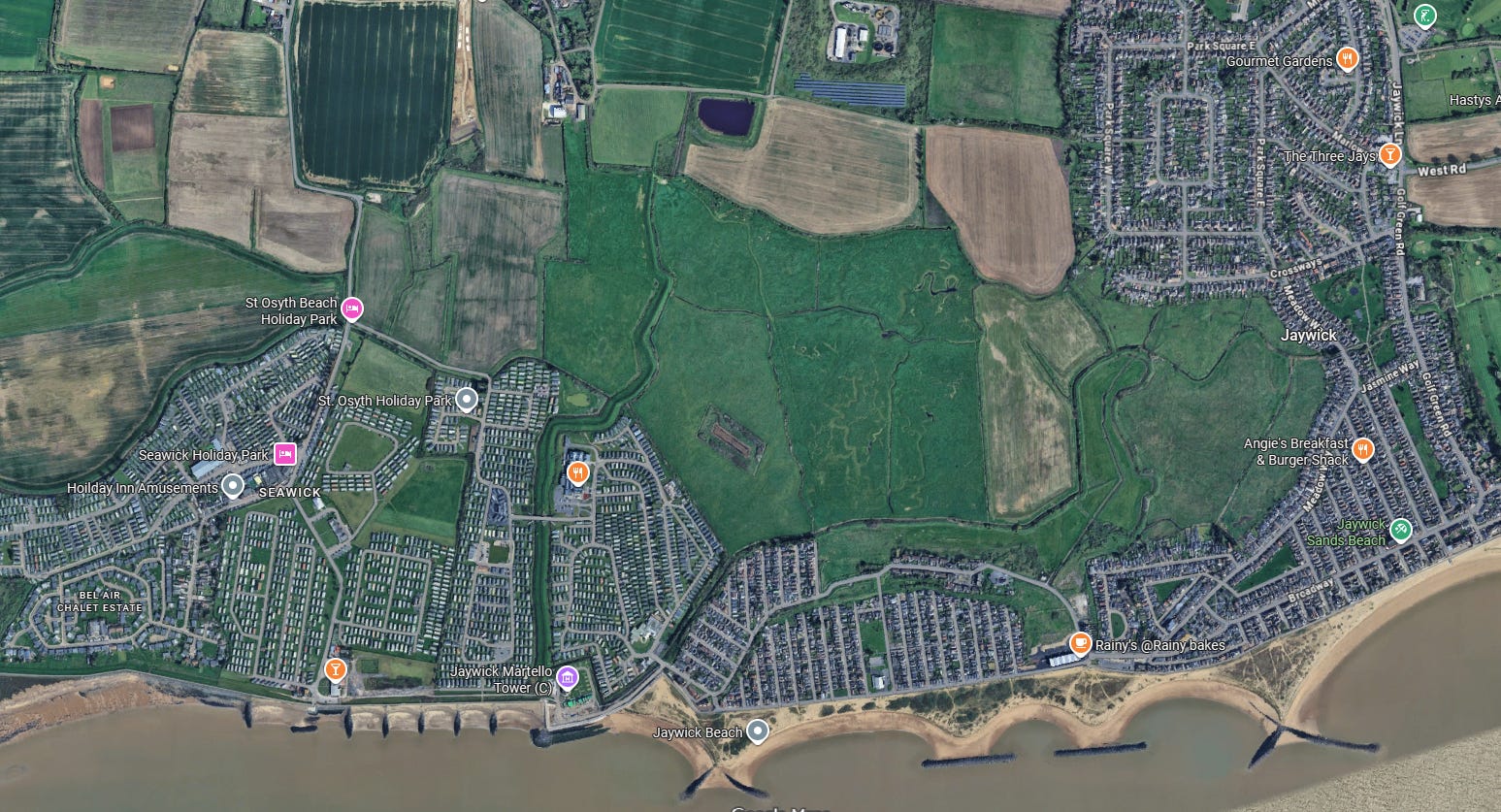
Jaywick proper is not too terrible a place and is broadly in line with the rest of Clacton, if a little worse-off. It is West Jaywick which one imagines when one thinks of the most deprived place in the country, its residences constructed originally as wooden holiday shacks for East Londoners, designed neither for longevity or permanent habitation, becoming full-time dwellings only as that population began to flee after the war. Various attempts to encourage redevelopment or the relocation of residents since the 1970s have failed, with the local District Council’s most recent ambitions for the area — that by 2026 it would have benefited enough from investments so as to become attractive for developers — have evidently been frustrated once again.
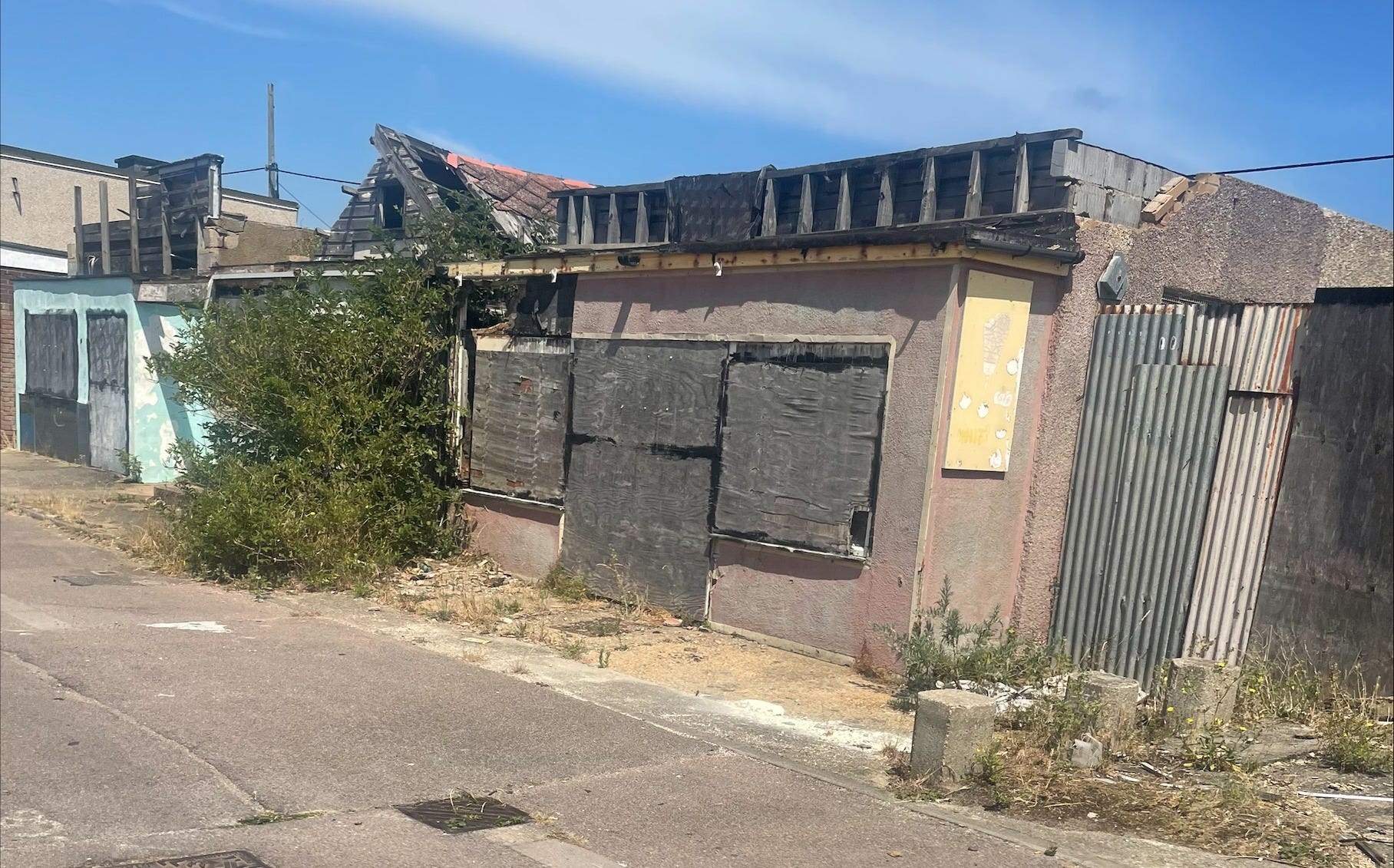
Most houses had a dog of some kind (mostly pitbulls) either chained up outside or being held back in the house, which made knocking on doors a daunting task. There was quite a range of people here, though they all held in common a general resentment and deep sense of apathy towards the world. Anyone knocking at their door, especially strangers, was seen as a nuisance; an unwanted interruption to time well spent doing nothing. Politically speaking, Clacton is mainly home to two types of people: those who are extremely right-wing and love Nigel Farage, and those who are extremely right-wing with no hope for any politician, including Nigel Farage. In West Jaywick alone, the latter kind were in the majority.
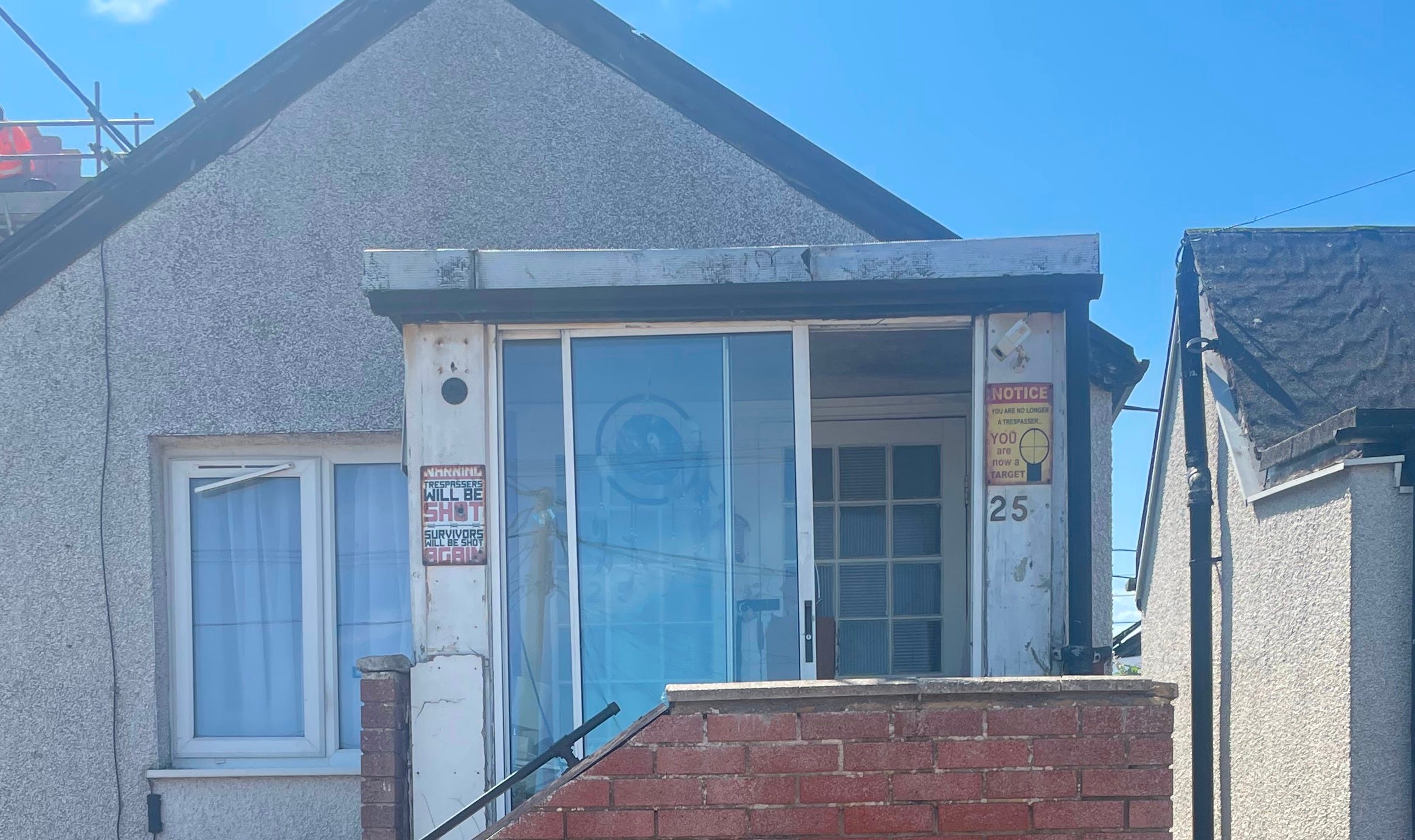
Despite all of this, people were generally respectful and would just turn you away if they weren’t interested. One Roma woman we met said she wouldn’t vote because she couldn’t read or write. When told about the availability of accessible ways of voting, she turned us away all the same. All in all, the most deprived place in England will be more polite to Reform campaigners than most Liberal Democrat voting communities. These are generally a people who just want to be left alone to live the rest of their lives in squalor, undisturbed in the minor comfort of their internal narrative that no better world is possible, so best not to dwell on its promise.
We did meet two Binface supporters in this area. One of them was a seemingly out of place middle-class-sounding old woman whose shack stood out as having been done up to a moderately high standard. The other was an obese man in his mid-twenties. Kai Stephens, candidate for the British Democrats in Clacton, posted on X about his own experience in Jaywick, suggesting that people there resented Farage and were concerned about demographic change. I don’t know whether Stephens went to West Jaywick specifically, but I can’t help but doubt the veracity of his claims. Even there, the balance of attitude towards Farage was positive, though perhaps insufficient to motivate voters to turn out on his behalf — and I don’t believe the word ‘demographic’ was ever uttered on the salt marshes west of Clacton until Stephens himself set foot in the area.
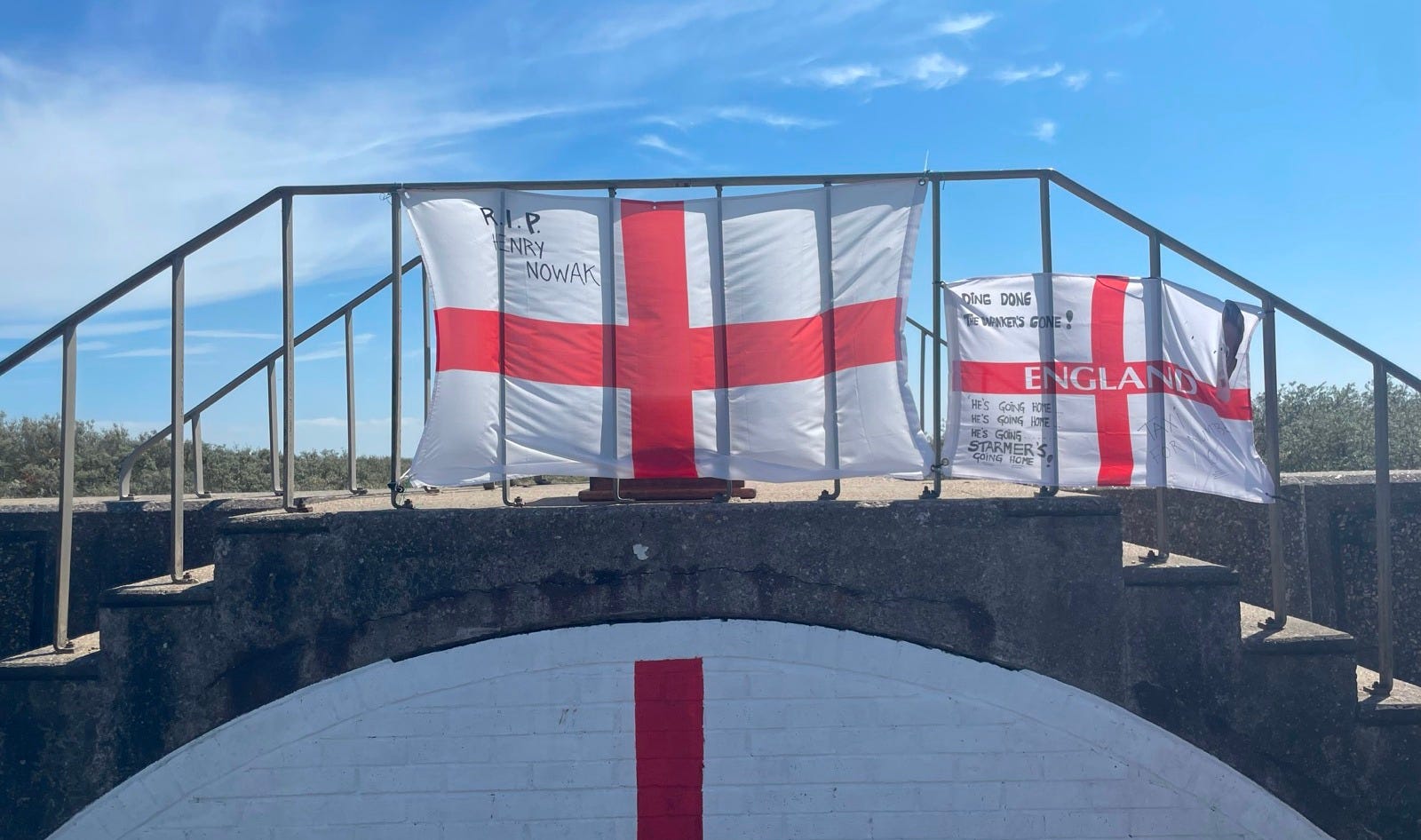
On the second Saturday, we visited a much nicer area of the constituency, this time in the northern suburbs of the town itself. It was here that we found a more enthusiastic reception. North Clacton is populated mostly by retirees, with some young families occupying the colourfully painted Deanoboxes that fill out the newer developments. Homes were well-kept, and lawns well watered (although presumably no longer as Essex languishes under hosepipe bans along with much of the rest of southern England). Almost everyone we spoke to was excitedly supportive of Reform, believing recent attacks on Farage to be nothing but the attempt of an establishment which does not care for the British people to destroy a decent man precisely because he does.
One further point of interest from speaking to Clacton residents is that the most committed supporters of Reform are uniformly more politically sound, as opposed to being the ‘cringey daytime TV civic nationalists’ that many online would have you believe them to be. Being extremely right-wing is not sufficient to motivate defections to fringe parties, and in our experience elsewhere it was not even necessary (in Makerfield, we spoke to several voters who were tempted towards Restore precisely because they saw it as less ‘divisive’ or ‘abrasive’ than Reform — a notion that the party’s campaigners presumably disabused them of). One woman in Clacton put it succinctly: she supports Reform because they are ‘the only party who care about our people and are willing to put them first’.
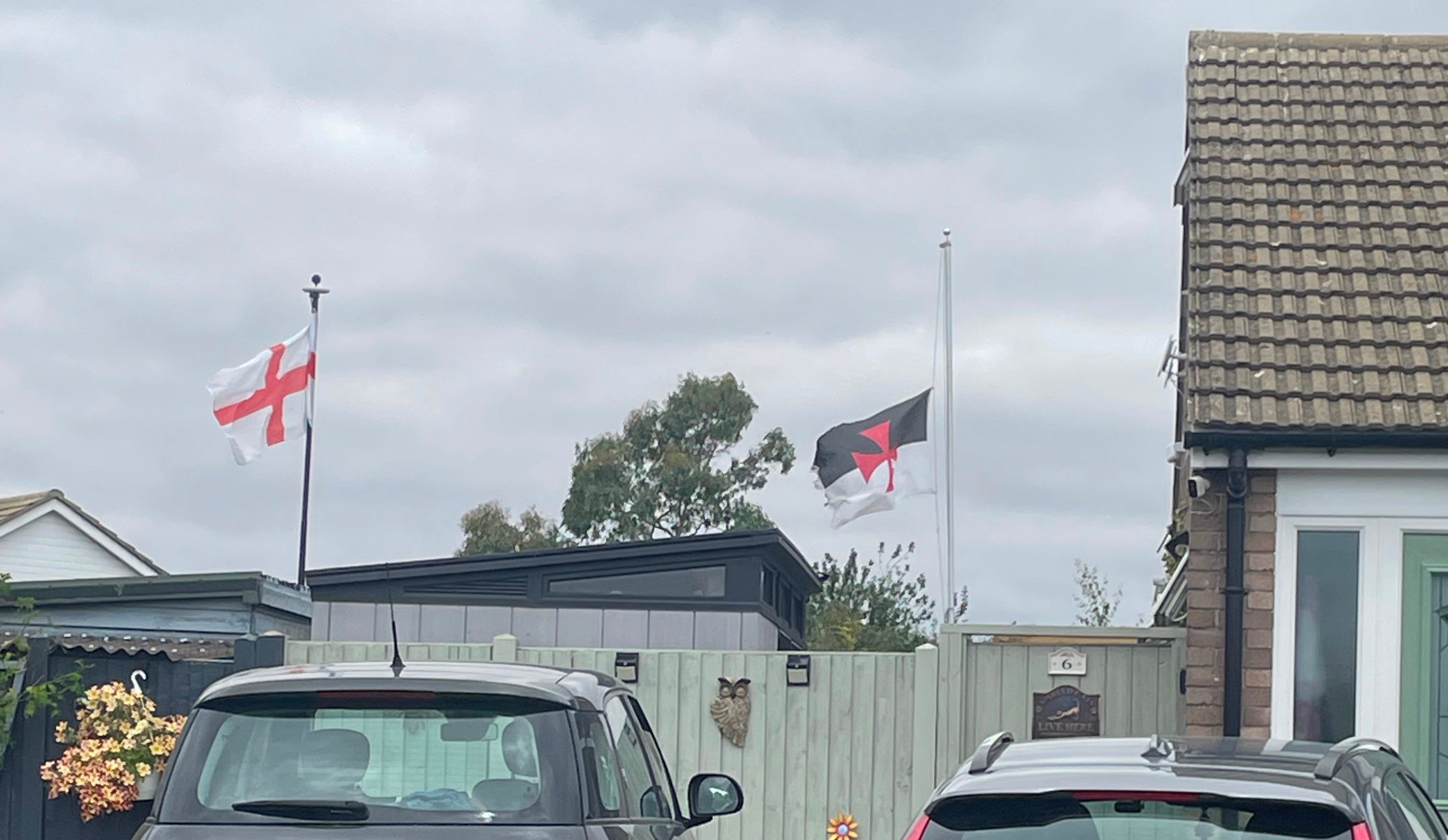
The most hostile voters we ran into were, as always, younger women whose newbuild front porches were adorned with ‘Live, Laugh, Love’ affirmations. Mostly, though, such people intended not to vote. We only met one Binface supporter in this area (despite knocking on many more doors than we did in West Jaywick, where we met two). Across the constituency, it was the oddest characters who were most likely to be Binface supporters — whereas the average Reform supporter is a respectable homeowner who is a part of their local community. We ran into one Restore supporter, flying a Knight’s Templar flag in his garden, who we convinced to vote Reform. We did not meet anyone who supported any other parties, established or fringe.
The most surprising discovery from our two days in Clacton, however, was the extent to which immigration has affected even this tucked-away part of England. On both evenings, after finishing our day’s work, we went to the pier (which naturally marks the centre of the town). It is here that one finds the local Wetherspoons (the same pub at which Farage had a milkshake thrown on him in 2024), perhaps the most energetic place in the constituency with patrons of all ages talking and drinking in the sun. Even on the right, it is commonly taken for granted that places like Clacton remain relatively untouched by immigration. That belief is often the basis of attacks from the left — centred on the idea that opposition to immigration must be unreasonable and rooted in ignorance as the places most motivated by that cause are those which are least exposed to the phenomenon.
This, perhaps sadly, is simply untrue: Clacton is a place very much touched by immigration, in some very strange ways. One example could be seen at the Greek restaurant next door to the Wetherspoons, from which emanated the sound of incongruous tunes and the smell of weed as it hosted some sort of Afrobeats hour attended exclusively by around 35 recent sub-Saharan African migrants. According to one local, this valuable cultural enrichment occurs every Saturday — and one imagines that Clacton is all the better for it. Another experience we had was in a retail park in North Clacton. We stopped there for lunch at a Subway (our other options limited to a Greggs and a Costa — what else could you need?). Every single member of staff there was a South Asian immigrant, having obviously arrived during the Boriswave given their poor grasp of English. This was far outside of the centre of Clacton, and perhaps the last place in the country you might expect to see Boriswave workers — yet here they were all the same.
It is now that we realise why locals vote so strongly for Nigel. This is a place with very little economic activity and therefore very few jobs. These entry-level positions should provide at least some opportunities for young Clactonians to earn some money and start their journey in life. Instead, these businesses have imported workers across 5000 miles and two oceans to fill the roles. There is no sense in which we can call such a situation fair. There is no place in the country — no matter how remote or how deprived — free from this imposition. Migration now touches every corner of England, and its impact will only continue to grow even if inflows are substantially reduced. It is no wonder that locals are rebelling against it.
Clacton is a community which warned against the mistakes that led to Britain’s current woes at every stage, and whose embrace of Reform is as much an ‘I told you so’ as it is a ‘fuck you’. It’s not a surprise to the people of this place to find themselves left behind by an establishment which puts foreigners first, instead of them. Farage, to them, represents less an unexpectedly necessary correction than the fulfilment of a prophecy — and their devotion to him should therefore not surprise us. Even as voters elsewhere waver, the people of Clacton stand firm. On Thursday, they will re-elect him in a landslide. And if the establishment they despise succeeds in using parliamentary procedure to force a second needless by-election this winter, they will happily tell them again: Farage is their man now, as he was always going to be.
This article was written by James Hykeham, a Pimlico Journal contributor. Have a pitch? Send it to submissions@pimlicojournal.co.uk.
If you enjoyed this article, please consider subscribing. If you are already subscribed, why not upgrade to a paid subscription?
"Anyone knocking at their door, especially strangers, was seen as a nuisance; an unwanted interruption to time well spent doing nothing." LOL Clap emoji
Good article- enjoyed this - thank you.